Kimchi 101

Everything you wanted to know about kimchi.

New to kimchi, or a lifelong fan? Here’s how to eat it, how to store it, and what’s going on inside the jar.

The basics

So, what is kimchi?

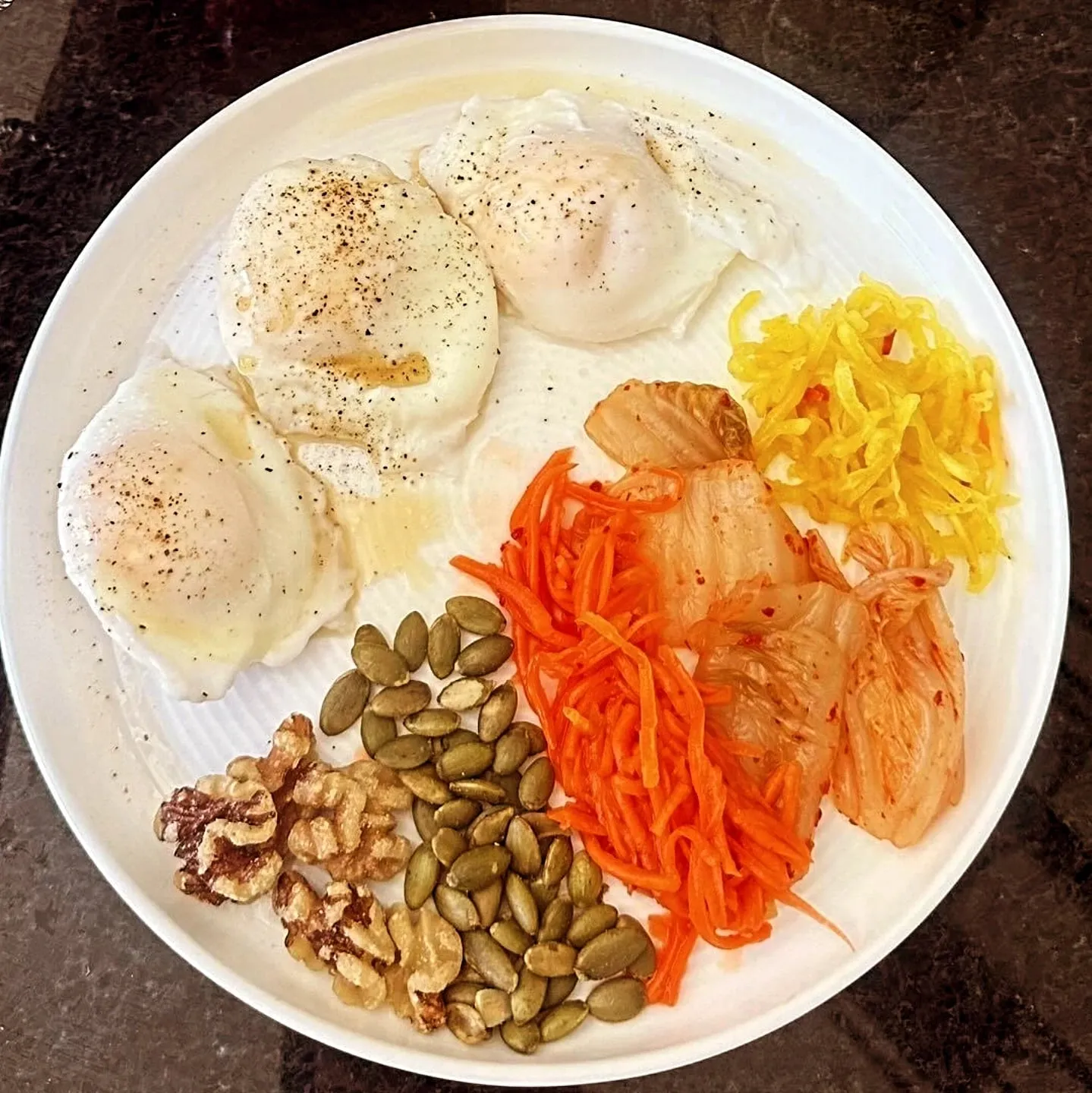
Poached eggs on a plate with napa kimchi, carrot and chives kimchi, curry pickled radish, walnuts and pumpkin seeds
Breakfast, upgraded: poached eggs with napa kimchi, carrot & chives and curry radish.

Kimchi is a traditional Korean dish of vegetables, salted, seasoned and left to ferment naturally. Napa cabbage and radish are the classics, usually seasoned with red pepper, garlic and ginger.

As it ferments, naturally occurring lactic acid bacteria (the same family of “good bacteria” behind yogurt and sourdough) turn the vegetables tangy, savoury and complex. That’s why kimchi is called a living food: it keeps gently fermenting, and changing, right up until you eat it.

It has been part of Korean meals for thousands of years, and there are more than a hundred ways to eat it.

The life of a jar

Fresh, ripe or sour?

Your kimchi’s flavour changes as it ferments, and every stage is good for something. Pick one to see what to make.

Crisp, bright and gently tangy. The vegetables still have all their crunch, and the seasoning tastes fresh and lively.

Try it

  • Straight from the jar
  • With a bowl of rice
  • In a crunchy salad bowl
  • On sandwiches and wraps

Tip: Like it more sour? Leave the jar on the counter for about a day in summer (two in winter), then pop it back in the fridge.

How to eat it

Eight easy ways to start.

Kimchi is incredibly versatile. Add any seasoning you like when you cook with it.

  • 01

    As is

    You don’t have to do anything to enjoy kimchi. Eat it straight from the jar.

  • 02

    With rice

    The classic. A spoonful of kimchi and a bowl of warm rice.

  • 03

    Fried rice & noodles

    Fry it with leftover rice or noodles for a fast, flavour-packed meal.

  • 04

    With eggs

    Scrambled, fried or in an omelette. One of Bella’s favourites.

  • 05

    Pancakes & fritters

    Chop it into batter for crispy, savoury kimchi pancakes.

  • 06

    Stews & soups

    Sour kimchi is the heart of a warming kimchi stew.

  • 07

    Burgers & pizza

    A tangy, spicy topping that wakes up anything off the grill.

  • 08

    Stir-fries

    Fry it with any meat or vegetables and season to taste.

From Bella’s kitchen

Two recipes to try tonight.

Uses Napa Cabbage Kimchi

Kimchi Fried Rice

A fast, satisfying classic, and the best way to use kimchi that’s getting a little sour.

You’ll need

  • 1 cup napa cabbage kimchi
  • 1 cup cooked rice
  • A spoonful of cooking oil

Optional

  • 1 cup fresh vegetables, like carrots, spinach or kale
  • 1 cup chopped chicken, beef or pork
  • Green onion, garlic, soy sauce, red pepper powder, parsley or cilantro, to taste

Method

  1. Chop the kimchi into small pieces. Kitchen scissors make this easy.
  2. Heat a nonstick pan with a spoonful of oil. Fry the kimchi with any vegetables until the moisture cooks off.
  3. If you’re adding meat, cook it through now.
  4. Add the rice and stir-fry until hot.
  5. Finish with chopped garlic, green onion or your favourite seasonings. Serve in a bowl and enjoy.

Uses Radish Kimchi

Radish Kimchi Crunch Bowl

Fresh, crunchy and ready in five minutes. Endlessly adaptable with whatever fruit and veg you have.

You’ll need

  • 1 cup radish kimchi
  • 1 cup chopped cucumber
  • ½ cup chopped apple
  • 1 tsp olive or sesame oil
  • A pinch of sea salt

To top

  • Sesame seeds, chopped green onion, a little cilantro, a spoonful of Greek yogurt

Method

  1. Toss the kimchi, cucumber and apple together in a bowl.
  2. Drizzle with oil and season with a little sea salt.
  3. Add your toppings and serve right away.

Make it your own

  • Sweet & fresh: apples, pears or berries
  • Savoury & zesty: avocado, chickpeas and a light vinaigrette
  • Tangy & bright: citrus, cucumber and fresh herbs
  • Tropical: mango, radish and leafy greens

Questions

Kimchi FAQ.

Still wondering about something? Bella’s happy to help. Call 519-200-0265 or email info@bellasfermentco.com.

Do I need to keep it in the fridge?

Yes. Always keep your kimchi refrigerated. At room temperature it ferments much faster and quickly turns sour and soft. In the fridge, fermentation continues slowly, so you may notice the flavour, aroma and texture change over time.

How long does it keep?

Follow the best-before date on the jar. Kept refrigerated and sealed, our handmade kimchi stays fresh for up to 5 to 7 months. Once opened, use clean utensils each time you serve it.

The lid popped (or it fizzed) when I opened it. Is that OK?

Completely normal! Kimchi keeps fermenting after it’s jarred, and the natural gases build up until you open it. It’s still safe to eat as long as there’s no mould and it has been stored correctly. To keep things calm, refrigerate it as soon as you get it home.

My kimchi is very sour and soft. Has it gone bad?

No. Sour, soft kimchi has simply fermented longer. It’s not a sign that it has spoiled. This is the perfect time to cook with it: try kimchi pancakes, stew or fried rice.

It tastes too fresh. Can I make it more sour?

Yes. Kimchi that hasn’t had much time to ferment can taste quite fresh, especially if it went straight from our kitchen to the shelf. Leave the jar on the counter for about a day in summer or two in winter, then return it to the fridge.

Is it vegan?

Yes. All of our kimchi and fermented vegetables are vegan and made without fish sauce or seafood.

Is it gluten-free?

Our recipes don’t contain gluten ingredients. If you have a severe allergy or need strict gluten-free certification, please contact us for the most current ingredient and facility information.

Do you use preservatives?

No. Our products are made without artificial preservatives or MSG.

Where is it made?

Every jar is handcrafted in our HACCP-certified kitchen at 630 Dundas Street in London, Ontario.